Skip to content

emily grace goodrich

  • Portfolio
    • Art and Illustrations
    • Miscellaneous Projects
    • Photography
      • Weddings and Engagements
      • Family Portraits
      • Commercial
      • This Desert Life
      • Americana
      • Gerald
      • Borderland
      • Balkan Summer
      • Malawi
      • Uganda
    • Product Design
  • Blog
  • About

  • Murchison Falls National Park

    IMG_4972

    “I can’t wait to see the lions,” my colleague said, clinging to the roof of the van in excitement.

    IMG_4909

    The rest of us looked at each other and shook our heads. It’s certainly not impossible to spot big cats in Murchison Falls National Park- they do live there, after all- but we’d warned our visitor we weren’t likely to see any, especially during rainy season. There aren’t many lions in the park, and with the tall green grass that sprouts up with the precipitation, there are countless places for them to hide.

    I’ve learned not to set many expectations for my travels here. Not only does Mother Nature have plans of her own, but car breakdowns, road construction, missing ingredients, and power outages all combine forces to keep you on your toes. The upside of this unpredictability is that Uganda often exceeds my expectations, and that trip was no exception.

    IMG_4969

    IMG_4988

    After fields full of antelopes and giraffes, we finally slow to a crawl next to another van of our tourists watching a lion crouched next to the bushes in the distance. As our driver maneuvered back and forth in the small opening, trying to find a viewpoint, someone informed him that there was another one, just up the road. And indeed there was, not just one, but two. We watched them for ages, he and she, just going about their day as if vans full of snapping cameras were nothing they hadn’t seen before. Still, though, it’s a little surreal to see them in the wide open world, as they were meant to be. That’s the funny thing.

    IMG_5019

    IMG_5070

    As the lions meandered out of sight, we moved toward the water to see Lake Albert in the morning sun. Shortly thereafter, though, our guide urged us back toward the vehicle and sped off down the road. “There’s a leopard,” he said, ignoring our requests to stop in a field of oribi. And suddenly there it was, crouched on the branches of a distant tree. We stopped breathing and watched in silence as it paced up and down the largest limbs for a few minutes before climbing down the trunk and disappearing into the grass below. While the rest of us were a bit dumbfounded, our visiting colleague seemed to expect it all along.

    IMG_5276-n

    Lowering expectations may protect us from disappointments, but I wonder if it doesn’t sometimes stop us from experiencing the excitement of possibilities as well.

    IMG_4842

    IMG_4865

    IMG_4941

    IMG_5173

    IMG_5375

    IMG_5312

    IMG_5211

    IMG_5194

    July 23, 2017

  • Strange Conversation

    For ages, I’ve been constantly editing and re-editing a collection of short stories, true stories, gathered from interactions on planes, trains, buses, and in the waiting places in between connections. I’m not sure why, but people tend to tell me everything about themselves when we are next to each other on the bus.

    I’ve been sitting on this project for years, figuring out where to send it, what to do with it, which stories to cut, which to keep. I finally just decided to put it out there into the world. So, here it is. Strange Conversation.

    October 14, 2016

  • Searching for the Shoebill

    I often joke that on my 60th birthday, I’ll buy an expensive set of binoculars and a birding guidebook, then let my inner birder soar. This is only half in jest. Trekking to remote corners of the planet in search of anything never sounds like a bad idea. Whether or not those ornithological aspirations come to pass, in this current moment, I live in one of the most spectacular bird-watching regions in the world. As a service to my potential future self, I try to take advantage of any birding situations as they arise.

    img_7965

    On my ever-growing Uganda bucketlist, “see the shoebill” was the easiest to accomplish, and the least like to be checked off. Proximity was the problem there- just as most people have never actually seen the Top 10 Musts Sees! in their own home towns, I have never bothered to explore much of Kampala or nearby Entebbe. Fortunately, my housemates recently planned a trip to welcome me back to Uganda after I’d spent two months away.

    We drove to Entebbe and joined a tour group as they bused from their hotel to the docks. Together we sped off on the 45 minute journey across Lake Victoria to the edge of the Mabamba swamp where smaller canoes and local guides awaited us. As we navigated through small channels in the papyrus and swamp sawgrass, our guide plucked a few blue lotus blossoms from the water. He handed them to us with a lack of ceremony that suggested he picks them for all the tourists.

    img_8087

    img_8002

    img_8078

    After quite awhile, we cut through a clearing in the tall papyrus and there it stood, alone on a small grassy island. Blaeniceps rex, the shoebill stork.

    img_8140

    The shoebill is an enormous bird, usually 4-5 feet tall, with a wingspan of around 8 feet. Named for their bulbous shoe-like beaks, they are somehow both comical and majestic. Solitary creatures, they build less that three nests per square kilometer. They spend the days stalking the murky waters for lungfish, catfish, and tilapia.

    The bird didn’t acknowledge the small herd of canoes surrounding it, staring only down at the water as it waited for fish. Still, it rewarded us with a few nonchalant postures at various angles. In some way, it seemed accustomed to the cameras.

    img_8139

    img_8107
    When the clicking shutters slowed, the guides handed out water bottles and boxes of digestive biscuits. I nibbled through several of them, watching not just the bird but the surrounding canoes. What a strange situation, this collective encounter with just one small piece nature.

    img_8072

    img_8109

    Still, though, we were lucky. There is only room for about nine of them to live in that area, and an encounter is not guaranteed. Satisfied, we rowed back across the swamp, passing a few fisherman’s encampments in the reeds, a few less thrilling bird species.

    img_8158

    img_7978

    Again we glided through the calm waters of Lake Victoria in wooden speedboats. This time the sun shone in full force, dissolving the morning haze. The weather was flawless by the time we reached Entebbe, so we settled in for lunch along the palm-lined shore. As day trips go, this one was far better organized and more relaxing than any I’ve been on before. And someday, on my 60th birthday, I’ll have one less thing to check off my life list, one less regret.

    img_8148

    img_7993

    img_8156


    September 9, 2016

  • The Salt Miners of the Danakil

    EmilyGraceGoodrich-Ethiopia

    One of the things I’ve learned from shooting wedding photos is how to edit and compose on the fly. Unfortunate exit sign in the church? Duck down and hide it behind the bride’s head, or turn a little to the left. Chain link fence blocking the view of the forest behind the happy couple? A soft focus blurs it into the rich green leaves of the background, erasing the unsightly gridlines. This false idealism is the theme of the day, and for the most part, we all play along. Travel photography often purports to tell a raw story, but the truth is that editing lives there too, or at least in my experience. Even in the remote salt pans of Ethiopia’s Danakil Depression, there are realities to crop out.

    EmilyGraceGoodrich-Ethiopia-10

    This spectacular part of the world is painted with wide white lakes of nothingness, ringed by hazy mountains. There, the salty brine pushes up from the earth and leaves behind a thick, deep crust of dirt-laden salt. As far back as anyone can remember, men with camels have walked 75 km-100km from the nearest large towns, Berahile and Mekele, to this strange barren desert. There, still more men work to cut uniform bricks of salt, which they sell to the traders with camels. These men stack and load them onto their animals, about 30 blocks each, and carry slowly away from the desert. In town, their value increases from 2 Ethiopian birr to nearly 15 birr per block. For both the traders and the miners, it is difficult but good work- a part of their culture and identity. Nearly all of Ethiopia’s salt comes from the lakes in that region.

    EmilyGraceGoodrich-Ethiopia-12

    EmilyGraceGoodrich-Ethiopia-9

    EmilyGraceGoodrich-Ethiopia-8

    EmilyGraceGoodrich-Ethiopia-7

    The desert is sweltering and dry and uncomfortable, legitimately one of the hottest places on earth. Even the workers live there only seasonally, in the cool winter months of November to March, when the morning temperatures hover around the mid-80’s. Standing in the wide open center of it, I couldn’t imagine anywhere more isolated. Yet we were part of a large tour group, a caravan of 9. A few other chains of vehicles ringed the worksite in the distance. We stood in a group, snapping photos and asking questions through our translator, ducking out of each other’s viewfinders and waiting for the moment when the other guy wasn’t standing in front of the camels. I’ve never really traveled in a tour group before, and when I realized how much I was editing, I stopped to consider the absurdity of the situation. Now and then, through the rest of the trip, I remembered to turn my camera and capture another sort of reality. The longs lines of clicking shutters as the camels walked off into the sunset, the Ethiopian pilgrims snapping photos with their smart phones to commemorate their long journey to Lalibela.

    EmilyGraceGoodrich-Ethiopia-11

    EmilyGraceGoodrich-Ethiopia-4

    EmilyGraceGoodrich-Ethiopia-14

    There are virtually no places left on earth which remain untouched by technology and rapid change. In the Danakil, radio towers bring communications, and new roads mean accessibility for entrepreneurs and developers. In this case specifically, there are talks of opening a new salt factory that will process salt locally and make the camel traders obsolete. At the moment, travelers to the region must be accompanied by armed security guards, but if tensions with neighboring Eritrea ease, the new roads will bring more vehicles, tourists, and entrepreneurs to the region. The camel traders worry that their days are numbered. Does tourism increase the chances for their vocation to survive, or diminish them? Would new factories improve their income and opportunities or leave them destitute? I’m not really certain.

    EmilyGraceGoodrich-Ethiopia-13

    Reality in the Danakil, then, is not a land or a people untouched by time, as the salt pans may appear at first glance, as our images pretend to capture. The truth is that it exists in the space between two worlds, or really one changing world, and waits uneasily to see what tomorrow will bring.

    April 26, 2016

  • Dallol

    EmilyGraceGoodrich-Ethiopia-1-4

    The smell of boiling acid wafted up from the bubbling technicolor sea below, burning my eyes and lungs and making me cough. “Come to this side,” a voice shouted toward our small group, “the wind is becoming too strong.” I picked my way across the crumbling rusted surface to higher ground and stopped to catch my breath in the stinking hot air. “As long as you can still smell the sulphur, you’re okay,” our cheery German friend, a chemistry teacher, explained. “It’s when you stop smelling it that you have to worry.”

    He spoke these words as we walked carefully across the dry patches between the green acid pools of Dallol, a volcanic explosion crater in the Danakil Depression. The Danakil lies 130 meters (430 feet) below sea level in the northeast of Addis Ababa, near the Eritrean border. When my friend suggested it as a possible destination for our upcoming trip, the first thing I did was navigate to Google. The images I saw were like nothing I had ever imagined. Ethiopia wasn’t at the top of my travel bucket list, but like so many times in life, the unknown often surprises you.

    The previous day, we’d driven from Mekele toward the small village of Hamed Ela, pausing briefly before navigating into the winter white nothing of the salt pans. The tires of the vehicles in our caravan crunched against the salt. The warm and briny air read like a summer’s day at the beach, but my mind looked out across the crisp white and deciphered, “snow.” That sensory disparity wrote the surrealism of the next two days. Here and there, patches of water dotted the porous surface, skimming over the salt here, creating ankle-deep pools there. As the sun set pink and orange across the shallow lake, the blinding brightness of the landscape darkened to blue, and the glowing sky painted pastel waves across the puddles.

    EmilyGraceGoodrich-Ethiopia-4

    In the high places, where the salt rose a few inches above the surface of the water, we toasted the day and joined our Ethiopian tour guides in a dance. I left and sat behind the vehicles on a dry spot to watch the sun disappear over the thin line of the horizon, the black of the night pushing down on it until only a faint line of blue remained. We drove back to camp, ate a warm and simple meal, explored the small dark village with headlamps in search of some semblance of a latrine, attracted the curiosity of a wandering military officer, and fell asleep on woven rope cots under the overwhelming thunder of a million bright stars.

    In the morning, the salt pans without their sunset magic took still looked like snow- but snow after the clean white of freshly laid powder falls prey to dust and traffic and sun and breaks into slushy, mudded chunks. We drove through the grey haze toward a red and brown mountain rising out of the centre of the lake. After a brief series of warnings from the guides- stay together, don’t step in the acid- we climbed the loose red and purple rock at the base of the volcano and made our way to the top.

    EmilyGraceGoodrich-Ethiopia-8

    There, small brine geysers bubbled through cones of salt, green pools of acid separated by salt ridges shouted out in glaring neon from the iron stained rocks, iron and sulphur bubbled up from the earth and mixed to create garish splashes of yellow, blue-green, orange, white, and seafoam. There was no shade. Dallol holds the record for the highest mean temperature on earth 34C (94F), and the days hover closer to 40C (104F). Someone told us that Dallol means “the colourful place,” in the local Afar language, but really, it means “disintegrated.” Both rang true. Our local guide, who didn’t speak much English, perched on the ridge and stared out over the colourful sea in awe. Through a translator we asked how often he’d been there. “Many times.” The bizarre sight still astounded him. The stench and the heat were unbearable, the pools and colors beautiful and jarring at the same time. I could have stayed for hours, but as soon as we turned to leave, relief washed over me.

    I’ve learned that there are no places on earth without something to teach us. Even the harsh deserts have their surprises. Light and shadow play with the barren landscape to create beauty from nothing, resilient people find ways to build a life for themselves, and plants and animals carve out surprises niches for themselves in the ecosystem. My takeaway from Dallol, perhaps, is that I haven’t really seen anything yet.

    EmilyGraceGoodrich-Ethiopia-2

    EmilyGraceGoodrich-Ethiopia-13

    EmilyGraceGoodrich-Ethiopia-3

    EmilyGraceGoodrich-Ethiopia-14

    EmilyGraceGoodrich-Ethiopia-15

    EmilyGraceGoodrich-Ethiopia-5

    EmilyGraceGoodrich-Ethiopia-6

    EmilyGraceGoodrich-Ethiopia-9

    EmilyGraceGoodrich-Ethiopia-6

    EmilyGraceGoodrich-Ethiopia-7

    EmilyGraceGoodrich-Ethiopia-5

    March 26, 2016

  • Last One to the Top

    EmilyGraceGoodrich-Ethiopia

    “You go on ahead, maybe I’ll just wait here,” I said, eyes on the rocks looming above us.

    It was day three of our travels through Ethiopia, and day one had found me, not toasting the New Year poolside in some swanky hotel as planned, but wrapped up in blankets, summoning the energy to cross the room and turn on the electric kettle for a cup of tea. The flu, as it turns out, doesn’t mix well with climbing mountains.

    EmilyGraceGoodrich-Ethiopia-15

    Ahead of us soared the face of the cliffs where 5th century Abuna Yemata Guh, known as the most inaccessible church in the world, hides among the rocks. We were halfway up the hillside that the Gheralta Cluster springs from, and I’d stopped every five minutes, like clockwork, to take a sip of water and stare out across the valley floor. To wait for my breathing to return to normal. Though time-consuming, this is not a bad way to climb. How much do we miss, speeding along trails, staring at the ground as we pick our way over loose stones and sprawling roots? The Tigray region stretched beautiful and stark across the horizon, and the only way to see it was to stop and turn around.

    EmilyGraceGoodrich-Ethiopia-6

    In spite of my reluctance, we pressed on, reaching the face of the cliffs. A group of local men waited with a harness to coax us one by one up the flat stone wall, perhaps two stories high. A small resourceful tree, sprung from a crack in the rocks, served to hold the rope in place while a short, wiry man on the ground pulled in the slack. The harness was optional, rented by our guide from a local shop, but worth the extra money when weighed against our collective lack of rock-climbing skills. We squeezed onto a precarious sloping ledge, waiting for everyone to finish the climb. I did my best to dig my nails into the stone beneath me, half in awe of the view laid out below, half terrified of sliding off the edge. We scrambled over a few rises and boulders, then descended onto a wide flat slab surrounded by walls of hollow stone peaks. In one cave, the elements of a baptism ceremony, in another the skull and bones of a priest peeking out through the crumbling brick that once sealed his tomb.

    EmilyGraceGoodrich-Ethiopia-5
    EmilyGraceGoodrich-Ethiopia-3

    We climbed again, this time stepping up onto a narrow ledge that wrapped around the face of the cliff, the ground seven hundred feet below. My knees buckled and the hot, dry wind whispered through the valley, emphasizing the drop. Pregnant women make this climb, they told us, to seek blessings, clad in long skirts and scarves. We clung to the rocks and picked our way across the ledge, not daring to look down. Eventually the narrow ledge widened into the mouth of a cave that looked out over the mountains, and a door inside the cave led us into a small room, the church, blanketed by mats and woven carpets. Frescoes depicting saints and apostles stretched across the ceiling. Astoundingly, because of lack of sunlight and water in the cave, they are perfectly preserved.

    EmilyGraceGoodrich-Ethiopia-4

    We spoke briefly with the priest, who had things to attend to in the valley 2,500 below, and then followed him back down the mountain as he floated through the most harrowing sections of the climb as if they were nothing.

    EmilyGraceGoodrich-Ethiopia-7

    EmilyGraceGoodrich-Ethiopia-8

    EmilyGraceGoodrich-Ethiopia-9

    EmilyGraceGoodrich-Ethiopia-10
    That evening, we visited another church, the 10th century Abraha We Atsbeha. This priest came from a long line of others, his father and grandfathers had been priests as far back as he can remember, his son will be, one day, too. He didn’t attend traditional school, his education was purely theological. The 15th and 16th century frescoes, restored after the church was burned in a fire, depict St. George and the dragon. This church was a concession from our guide, we were meant to climb up to another, but the slow pace at Abuja Yemata Guh narrowed our possibilities for the day.
    EmilyGraceGoodrich-Ethiopia-11

    A week later, trekking 13 miles a day through the Simien Mountains, my lungs burned in the altitude, still weighed down by lingering flu. We scrambled up and down trails between 9,000 and 12,000 feet, stopping only to watch the Gelada monkeys play or to drink in the endless and breathtaking views from the mountaintops. Again and again, I paused to catch my breath on the steepest climbs, and ceded carrying rights of my backpack as the two older South African men in our group insisted on letting me climb unhindered by camera lenses and water bottles. It’s embarrassing to be the last one up the mountain, the one everyone else waits for at the top. They were gracious, of course, insisting the rests were welcome to everyone, but that’s little consolation to the part of me that never wants to draw attention to myself, never wants to inconvenience anyone or accept help.

    EmilyGraceGoodrich-Ethiopia-12

    But here’s the thing. When I was thirteen years old, I passed up the opportunity to hike to Machu Picchu, because it looked too hard. I stayed in the city, visiting restaurants and museums, and though I enjoyed the time there, I have regretted that decision for the rest of my life. Not everything in life comes easy. Sometimes it’s best to put aside comfort and listen to the friends coaxing you to jump in. Sometimes you have to put up with a little suffering or reluctantly accept help. On the other side of those uncomfortable moments, though, lie the sorts of views that burn themselves into your memory, that will come back to you on your lowest days and give you faith in your own ability to persevere and reach the top.

    EmilyGraceGoodrich-Ethiopia-13

    So if you must- use the rope, the outstretched hand. Ignore the stubborn pride that wants to finish on its own terms. Just don’t stop moving- at least not for more than a minute or two.

    EmilyGraceGoodrich-Ethiopia-14

    February 29, 2016

  • Oregon Coast

    In the introduction to the travel section of my other project, I use the sentence “you can step slowly through these experiences and savor them, or race along the trail at an ever increasing speed, drinking it all in as if there is no tomorrow.”

    The latter half of that phrase is derived from a quick one-day trip along the Oregon Coast. Back in 2010, I spent a week in Oregon to photograph the wedding of a friend. She was gracious enough to gift me with one day’s use of her car and a full gas tank after the new couple left for their honeymoon and before my flight, so in this instance there was no tomorrow’s chance to explore.

    Oregon Coast

    I started my journey at a beach near Lincoln City, lingering to let the calming roar of the ocean wash over me after a busy weekend.

    Oregon Coast   The next stop had a two-mile loop hiking trail, which I set out upon at a slow pace. But as I moved through the foggy morning forest, the scenery only increased in beauty. I caught myself at a near jog, trying to finish the trail as quickly as possible in case there were anything ahead along the coast I might miss.

    Oregon Coast

    Oregon Coast

    Oregon Coast

    The more I explored, the more beauty I stumbled across. I spent the afternoon driving up the highway, stopping at any hint of trail or beach, and racing through the scenery as quickly as I could manage, breathing deeply, trying to absorb the shouting green and magnitude into my lungs.

    Oregon Coast

    I’ve never felt so simultaneously frantic and relaxed, and years later, I still can’t explain the overwhelming sensation that washed over me that day. This next year, I’m going to be spending more time in Oregon for work, and I can’t wait to explore these places more slowly, to savor them and let them sink into my bones.

    Oregon Coast


    February 28, 2015

  • Wales

    After the wedding and the briefest tours of London, I rented a car and drove out to Wales with a couple of friends. Along the way, we stopped at the Goodrich Castle, named for its builder Godric Mappeson. Set above the River Wye, just outside of the town of Goodrich, this 11th century castle was destroyed during the Civil War in the 1700’s in a single night. Somewhere between the castle, its builder, and the surrounding village are the origins of my surname.
    IMG_8592   IMG_8609

    IMG_8624    IMG_8642

    IMG_8650  IMG_8656   IMG_8672

    We ended our long drive in Narberth, a small town near the seaside in Wales. Despite its tiny size, it has some great shops and restaurants. We also did a day trip to Tenby, a popular vacation spot right on the coast with ice cream trucks on the beach, beautiful cliffs, and must old hotel lobbies serving high tea.


    IMG_8675  IMG_8679  IMG_8684  IMG_8690   IMG_8699         IMG_8730 IMG_8738  IMG_8750  IMG_8756

    And last but not least: sheep.

    IMG_8774

    June 25, 2014
    beach, Narberth, roadtrip, sheep, tea, Tenby, Travel, United Kingdom, Wales

  • Barcelona

    There are so many sides to Barcelona, which is perhaps true of many coastal towns. My favorite part of the city is its walkability, and how quickly you find yourself in wildly different places. The small streets and neighborhoods of La Barceloneta are no exception as they suddenly spill onto beaches and hotels, with palm trees and clean, crisp lines. Staring at the sea, I found myself wishing I’d spent more time in the parks and gardens of Montjuic, and was happy to see a cable car extending from the beaches to the hillside across the bay.

    IMG_6406

    IMG_6402

    IMG_6401

    IMG_6391

    IMG_6426

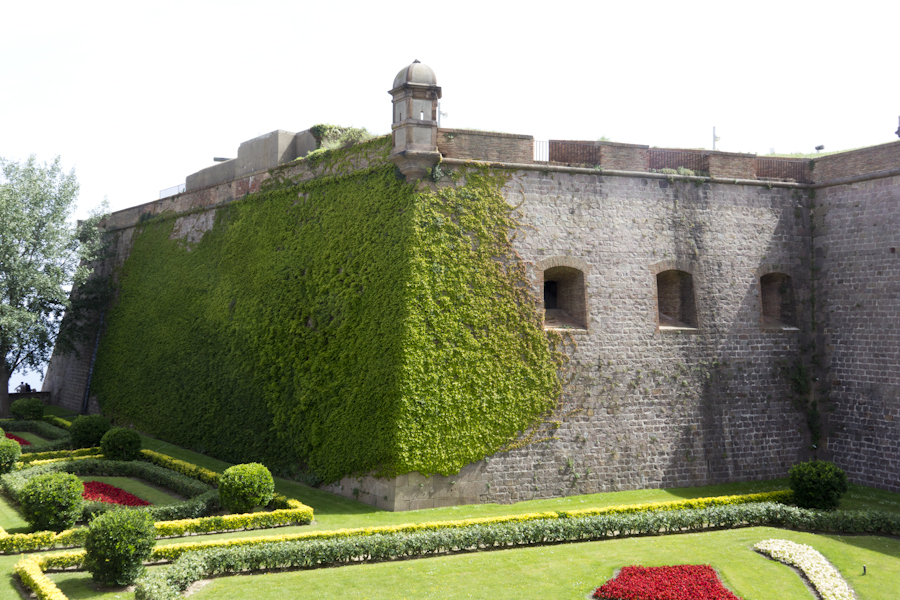
    Montjuic is full of beautiful gardens and quite greens spaces, and houses a castle and numerous museums. It’s located on a steep hillside with views of the city from one side and the ocean from another.

    IMG_6192

    IMG_6491

    IMG_6519


    IMG_6511

    IMG_6492

    The next morning, I headed to Park Guell, another busy place that’s worth the crowds to see. There are colorful mosaics and beautiful gardens all around.

    IMG_6568

    IMG_6584

    IMG_6587

    IMG_6606

    IMG_6645


    Under the beauty of art and gardens and architecture, though, there are stories not advertised in travel brochures, and I think it’s important not to just skim over the surface of a place when you travel, no matter how short the trip may be. After the park, I walked through the Gracia neighborhood, full of small independent shops and boutiques that remind me of South Park back home. This strikes me as a truer heart to the city, and from the windows and balconies of many homes, you’ll see the Catalan flag flying, a reminder of the ongoing movement for Catalonia’s independence.


    IMG_6670

    IMG_6673


    Last but not least, I stopped by La Boqueria, a busy market full of fresh produce, butcheries, and small restaurants- basically food heaven. I’m only sorry that a small travel budget kept me from staying there all day, but of the things I did sample, spicy olives and dragonfruit definitely top the list. I wish I’d had more time there, but I have a strong feeling that I’ll be back.

    IMG_6379


    IMG_6677


    June 22, 2014
    Antoni Gaudi, Barcelona, Catalonia, La Boqueria, Mediterranean, Park Guell, Spain, Travel

  • Barcelona and La Sagrada Familia

    I’m not even sure where to begin with Barcelona, it may very well be my favorite city on earth. So far. I didn’t have any particular expectations of it, but had I, they’d have been far surpassed. With its tree-lined streets, sleepy afternoon plazas, and the saturation of art and architecture; I spent three days just walking through the city, and could have easily spent three more.

    On Sunday, when I arrived, several of the museums were open for free during the afternoon hours, so I headed to the Gothic Quarter to visit the Museu d’Història de la Cuitat and the Museu Frederic Marès. The first is built over an underground archeological dig site, the second is a collection of major Spanish sculpture, mostly collected from churches.

    What struck me, though, were the top two floors of the Frederic Marès Museum. In addition to his sculpture collections, Marès’ amassed a menagerie of small and strange items which fills dozens of rooms. Postage stamps, tin soldiers, iron scissors, and tobacco pipes; dried floral arrangements, pocket watches, and a thousand other items are arranged neatly in glass cases throughout the rooms, by category. I can’t put the a finger on the reasons I found all of that so fascinating, but there is some idea that it sparked in my mind which is exactly the sort of inspiration I’ve needed to find.

    In the evening, the line for the Picasso Museum snaked around the block for two hours, so instead, I walked up and down the streets full of small galleries and filled my head with imagery. I miss those sorts of evenings, more than I realized. These days in Uganda, I’m struggling to find time for paint and pencils, but I’m hoping the biggest takeaway from this trip will be my newfound resolve to carve out that time, no matter what.

    IMG_6205

    IMG_6209

    IMG_6253

    IMG_6248

    IMG_6266

    The next morning, I walked to La Sagrada Familia on sleepy streets, before cars and pedestrians filled the place with noise and energy. There’s a beautiful park in front of this Roman Catholic basilica, filled with jacoranda trees and wooden benches, a perfect place for a cup of coffee.

    Mostly designed by art nouveau architect Antoní Gaudí, the basilica has been under construction for over one hundred years, and work is still ongoing. Despite the cranes and scaffolding outside and the astounding crowds, the finished interior is a serene and inspiring place, full of angles and colors and light. I could have spend the whole day inside, staring up at the ceiling.

    This is the thing I found most interesting about Barcelona, that nearly everywhere in the heart of the city,  it you stop and let them, the green spaces and attention to the design of things can transport you away from the hard and fast feel of “urban” and into some other strange middle ground between the pages of reality.

    IMG_6276

    IMG_6277

    IMG_6287

    IMG_6291

    IMG_6306

    IMG_6295

    IMG_6333

    IMG_6331

    IMG_6318

    IMG_6368

    June 16, 2014
    Antoni Gaudi, Barcelona, Gaudi, La Sagrada Familia, Museu Frederic Marès, Spain, Travel

Previous Page Next Page

Designed with WordPress

Loading Comments...